Heavy-Duty Vehicle Files: ECU Tuning, AdBlue, EGR and DPF
Files for heavy-duty vehicles must be matched to the correct engine control unit, software version, and intended use. For trucks and work machines, knowing only the model name and engine output is not enough. The original file, control unit identification, and technical condition of the vehicle are all important parts of the information required.
Revtech Files creates files for heavy-duty vehicles and provides a fileservice with technician support. This guide explains what the service involves, how AdBlue OFF, EGR OFF, and DPF OFF differ, and which questions should be answered before ordering a file. DPF means diesel particulate filter; it is sometimes incorrectly written as PDF.
What does a fileservice for heavy-duty vehicles involve?
A fileservice involves modifying the software or calibration in a control unit according to an agreed request. The ECU is the engine's electronic control unit. It manages functions including fuel injection, boost pressure, torque control, and interaction with the emissions systems.
Heavy-duty vehicles may have several control units that exchange information. For example, engine management may need to work with the transmission control unit, or TCU, and separate emissions control units. The scope of the work must therefore be assessed for the specific installation, not just the engine type.
An order may be for engine tuning or a specific calibration change. The available options must be confirmed against the original file and control unit details. A file for a similar machine is not automatically suitable for your vehicle.
AdBlue OFF, EGR OFF and DPF OFF: what do these terms mean?
These terms describe changes that affect emissions control functions. They are not the same as a standard performance tune and should not be treated as a general solution to recurring faults.
AdBlue OFF: changes to SCR-related functions
AdBlue is used in the SCR system, where a urea solution is injected into the exhaust to reduce nitrogen oxide emissions. The system may include dosing equipment, temperature sensors, NOx sensors, and a separate control unit.
AdBlue OFF is a term for software changes that deactivate functions associated with this system. However, an AdBlue warning by itself does not identify the faulty component. Before ordering any work, diagnostics should distinguish between issues such as dosing problems, sensor faults, electrical faults, and communication problems.
EGR OFF: changes to exhaust gas recirculation
EGR stands for exhaust gas recirculation. The system returns some exhaust gas to the engine intake to help reduce nitrogen oxide formation under certain operating conditions.
EGR OFF refers to changes that deactivate EGR-related functions. First check whether the problem is actually related to the EGR system or whether the symptoms have another cause. Problems with the air supply, sensor signals, or other components will not necessarily be resolved by a software change.
DPF OFF: changes to particulate filter functions
A DPF is a diesel particulate filter that captures soot. Regeneration burns off accumulated soot under controlled conditions. Ash, however, is not removed by regeneration and may require a different solution.
DPF OFF is a term for changes that deactivate functions associated with the particulate filter. High differential pressure or frequent regeneration should be investigated first. The cause may be the filter, pressure measurement, temperature sensors, or engine combustion. Simply hiding fault codes is not a reliable repair.
Check legal requirements and intended use first
AdBlue, EGR, and DPF are part of a vehicle's emissions control system. Deactivating these systems may breach rules governing vehicle approval and use. It may also affect inspections, warranty, insurance, and the ability to sell the vehicle.
Regulations vary by country and vehicle category:
- EU: Emissions requirements and type-approval rules are relevant, along with national rules for vehicle use and inspection.
- United Kingdom: Changes to emissions systems may affect legal road use and inspection requirements, including the MOT where applicable.
- United States: Federal rules generally prohibit tampering with regulated emissions controls. Additional state requirements may apply.
Using a machine off public roads does not automatically mean that its emissions systems may be deactivated. Work machines may also be subject to emissions requirements. Before ordering a change, check the specific use case with the relevant authority or a qualified adviser. If an emissions system is faulty, diagnostics and a compliant repair should be the starting point.
What information is needed for a heavy-duty vehicle file?
Good information reduces the risk of an incorrect file, misunderstandings, and unnecessary rework. Prepare as much of the following as possible:
- Vehicle or machine make, model, and year.
- Engine designation and details of the existing configuration.
- ECU manufacturer, control unit number, and software identification.
- Original file and information about any previous modifications.
- The tool and method used to read the file.
- Fault codes, relevant measured values, and a clear description of the symptoms.
- Requested work, intended use, and any technical limitations.
OBD, Bench and Boot
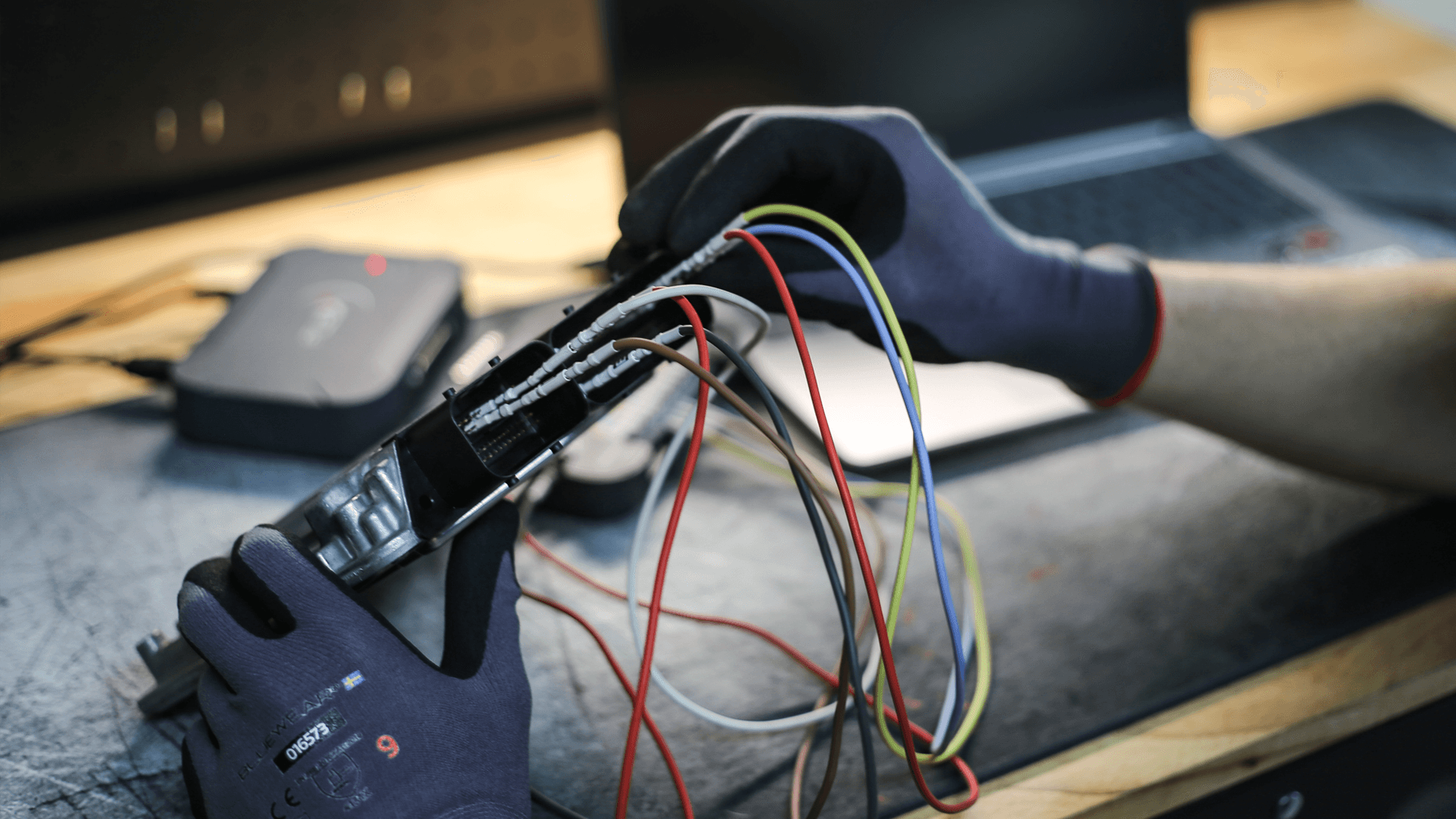
OBD means accessing the control unit through the vehicle's diagnostic port. Bench typically means connecting directly to the control unit's connectors outside the vehicle. Boot means accessing the control unit through a specific programming mode and may require opening the unit.
The method depends on the control unit and tool support. A virtual read may retrieve a matching original file from the tool provider instead of reading the complete contents directly from the vehicle. Always state which type of read was used when submitting an order.
How to assess the quality of a fileservice
For heavy-duty vehicles, reliability and correct interaction between systems are important. Engine tuning may need to take torque limits, drivetrain capabilities, and thermal load into account. Do not request a specific power increase without first assessing the vehicle's condition and configuration.
A technically sound process must also account for checksums—the values used to verify data integrity. A correct checksum does not, by itself, prove that the calibration is suitable for the vehicle.
Common mistakes include using a file from the wrong software version, failing to keep a backup, or treating every fault code as a software problem. Save the original file and follow the tool provider's instructions for power supply, writing, and recovery. After programming, carry out appropriate checks of fault codes, measured values, and system operation.
Order heavy-duty vehicle files from Revtech Files
Revtech Files is operated by Fileservice Scandinavia AB in Kalmar, Sweden. We create files for heavy-duty vehicles and provide tested files with real technician support. The fileservice is open 24/7. The work available for a specific vehicle must be assessed based on its control unit, file information, and the requirements of the request.
If you need files, you can register a free account with Revtech Files. Prepare the original file, control unit identification, and a clear description of your needs so the request can be assessed using the right information. Also state whether the vehicle has already been modified or has active faults.