Safe Stage 1 Files: How to Choose Quality Over Promises
When searching for safe Stage 1 files, it is easy to focus on power figures and price. But an engine remap should be assessed by more than the horsepower it is claimed to deliver. The correct software version, carefully considered torque and access to technical support are just as important.
As in any industry, quality varies between suppliers. A professional service should be clear about which file is intended for your vehicle, what information is needed and how questions are handled after programming. For both vehicle owners and workshops, this is a better starting point than bold promises at the lowest possible price.
What does a safe Stage 1 file mean?
Stage 1 tuning normally involves adapting the engine management software with the vehicle’s existing hardware as the starting point. However, the term is not a uniform quality standard. Two files sold as Stage 1 may have different objectives and may have been developed with different levels of care.
A professionally developed file takes into account how the engine management system works as a whole. The ECU, or engine control unit, regulates factors including fuel quantity, air supply and torque. On a turbocharged engine, boost control may also be part of the calibration.
In this context, safety means avoiding unnecessary risks through the use of the right file, sensible targets and controlled programming. No modified file can guarantee that an engine or gearbox will never have problems. The vehicle’s condition, maintenance, fuel and usage also affect the outcome.
Maximum power is not always the best result
For example, a large increase in torque at low engine speeds can place greater strain on the clutch and drivetrain. On petrol engines, the calibration needs to account for factors such as fuel octane and knock control. On diesel engines, the interaction between air mass, injection and boost pressure is central.
A well-considered Stage 1 tune is therefore about balancing performance, drivability and mechanical load—not simply achieving a high peak figure.
How to recognise a reputable file supplier
You cannot assess a file’s quality from its price or polished product description alone. However, you can assess how the supplier works and the questions they ask.
A professional discussion should clarify:
- Which vehicle, engine and gearbox the file is intended for.
- Which ECU and software version are installed in the vehicle.
- How the original file was read and which tool was used.
- Whether the vehicle has previous modifications or known faults.
- Which fuel and usage conditions the calibration should be based on.
- How technical questions and any adjustments are handled.
Warning signs to take seriously
Be cautious of offers that promise identical results for every vehicle with the same engine code. The same engine model may be used with different control units, software versions and drivetrain combinations.
Other warning signs include absolute promises of risk-free tuning, unclear support, or a supplier that does not ask for relevant vehicle information. A low price does not necessarily mean low quality, but price alone says nothing about how well the file is matched to the vehicle.
The original file and correct identification are the foundation
A reliable process starts with identifying the software currently installed in the vehicle. A file from another car is not automatically suitable just because the model and engine output appear to match.
Previous remapping should also be established. If the starting file has already been modified, there is a risk that further changes will build on an unknown calibration.
OBD, Bench and Boot: the method must suit the control unit
Reading and programming can be carried out using different methods:
- OBD: Communication through the vehicle’s diagnostic port.
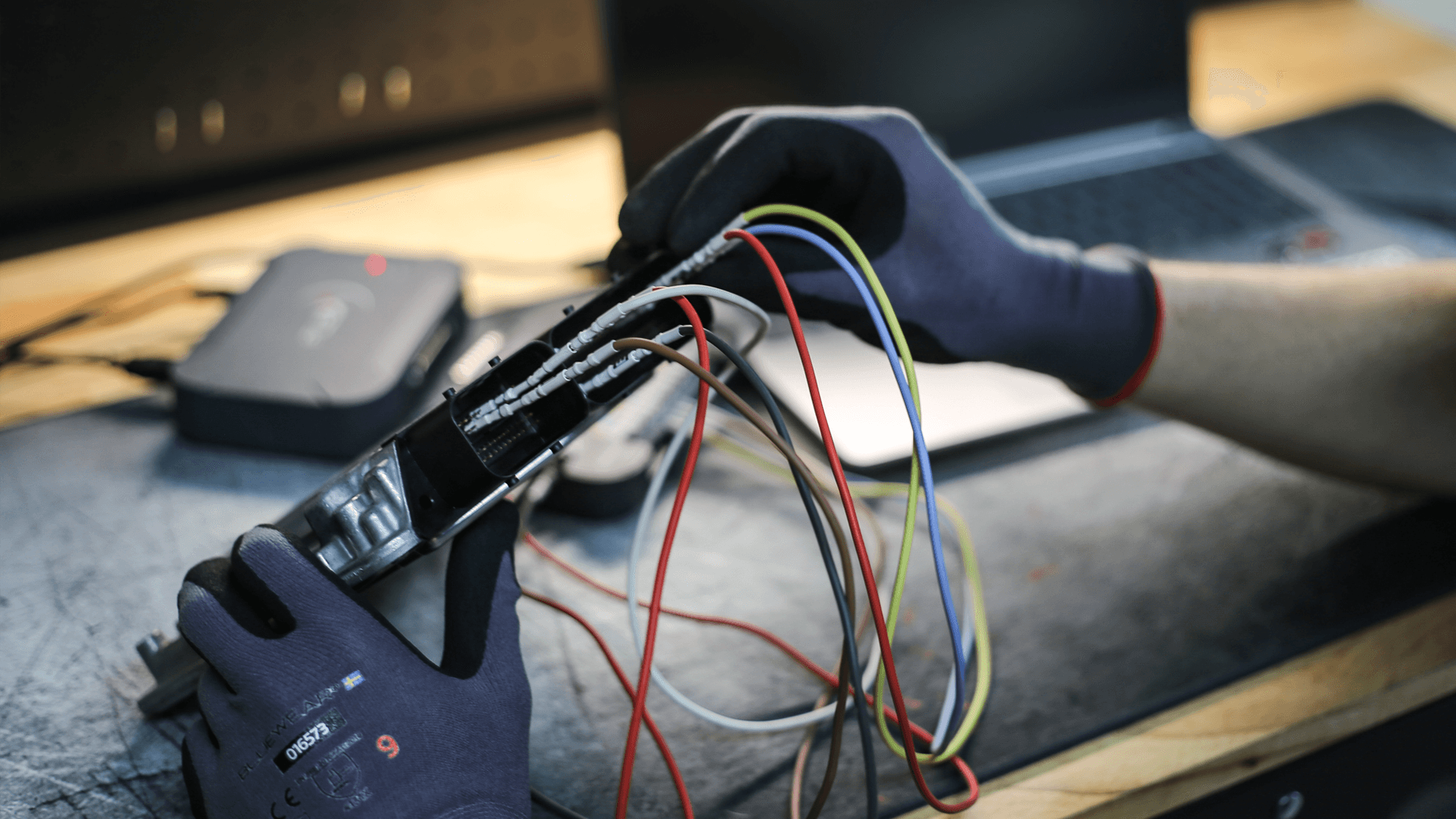
- Bench: Connection directly to the control unit’s connector, normally outside the vehicle.
- Boot: Access that, for some control units, requires opening the unit and connecting according to the tool’s instructions.
The method itself does not determine file quality. What matters is that the tool supports the specific control unit and that the work follows the correct instructions. Stable power supply during programming and a saved original file are important parts of the process.
Checksums also need to be handled correctly. A checksum helps the control unit verify program data, but a correct checksum does not prove that the calibration itself is good.
Check the vehicle before and after tuning
A good file cannot compensate for mechanical faults. A leak in the charge-air system, ignition problems or a worn clutch can become more noticeable when the load increases.
Before programming
For a workshop, the initial checks should include:
- Reading and assessing relevant fault codes.
- Checking service history and known operating issues.
- Confirming existing hardware and software modifications.
- Assessing the engine, gearbox and clutch in light of the vehicle’s condition.
- Documenting the original file and control-unit identification.
After programming
Post-programming checks should be tailored to the vehicle and the changes made. Reading fault codes, checking drivability and logging relevant operating values can help identify irregularities. Logging means recording how factors such as boost pressure or fuel control behave during operation.
A power measurement can provide useful information, but a high power figure alone is not proof of quality. How the vehicle behaves under different loads matters too.
Is gearbox tuning needed alongside Stage 1?
Not always. It depends on the gearbox, control system and the torque the engine is expected to deliver. The TCU, or transmission control unit, may have limits and functions that need to be considered alongside the engine calibration.
Gearbox tuning should therefore not be treated as an automatic add-on or a solution to mechanical wear. Ask the supplier to explain whether it is necessary for your specific engine, gearbox and desired outcome.
Why technical support is part of a file’s value
For a workshop, the file is only one part of the job. Identification, programming and follow-up also need to work. If the vehicle shows abnormal readings, there should be someone available to discuss the data with—not just a download button.
Revtech Files is operated by Fileservice Scandinavia AB in Kalmar and provides tested files with technical support from technicians. The file service is open 24/7. This does not mean every vehicle can be assessed without supporting information or that technicians are necessarily available around the clock, but it provides a clear foundation for professional cooperation.
Learn more about the Revtech Files file service when comparing suppliers and finding out what to expect before placing an order.
What should vehicle owners ask their workshop?
You do not need to be able to read engine calibration maps yourself to make an informed choice. Start with a few practical questions:
- Do you check the vehicle before tuning?
- Is the file selected to match the software currently installed in the vehicle?
- What fuel and maintenance requirements should I follow afterwards?
- How do you check the results?
- Who can help if something needs investigating?
Also ask how the change could affect the warranty, insurance and approval for road use. In Sweden and elsewhere in the EU, as well as in the UK and the US, rules concerning emissions, vehicle modifications and insurance can affect what is permitted. Requirements vary, and the label Stage 1 does not automatically mean a modification is approved.
Choose evidence and accountability over bold promises
Ultimately, safe Stage 1 files depend on a well-considered process: correct identification, suitable calibration, controlled programming and the ability to follow up. None of these should be replaced by a promise of maximum power.
If you want to choose quality over guesswork, tested files and access to technical expertise are worthwhile reasons to consider Revtech Files. Start by gathering information about the vehicle, control unit and any modifications. This makes the discussion more specific and improves the basis for selecting the right file.